
Wanting to win your first government contract and knowing where to start are two very different things. The government buys over half a trillion dollars of goods and services a year and is legally required to steer a large share to small businesses, yet most first-timers stall out, not because the work is not there, but because they aim at the wrong target first. This guide is the roadmap: the exact stages from unregistered to first award, why your first contract should be small and local rather than large and federal, and how to avoid the mistakes that make people quit before they win. Think of it as the map that connects every individual skill, finding, registering, triaging, bidding, into one path you can actually walk.
Why your first government contract is winnable
The government is required by law to try to award 23% of federal prime contract dollars to small businesses, which works out to more than $160 billion a year set aside for firms like yours, according to the U.S. Small Business Administration. Add state and local government, a combined multi-trillion-dollar market, and the opportunity is enormous. The barrier is almost never demand. It is knowing the path.
That path has five stages, and most people fail by skipping to the end, chasing a large, visible federal contract before they have registered correctly or built any past performance.

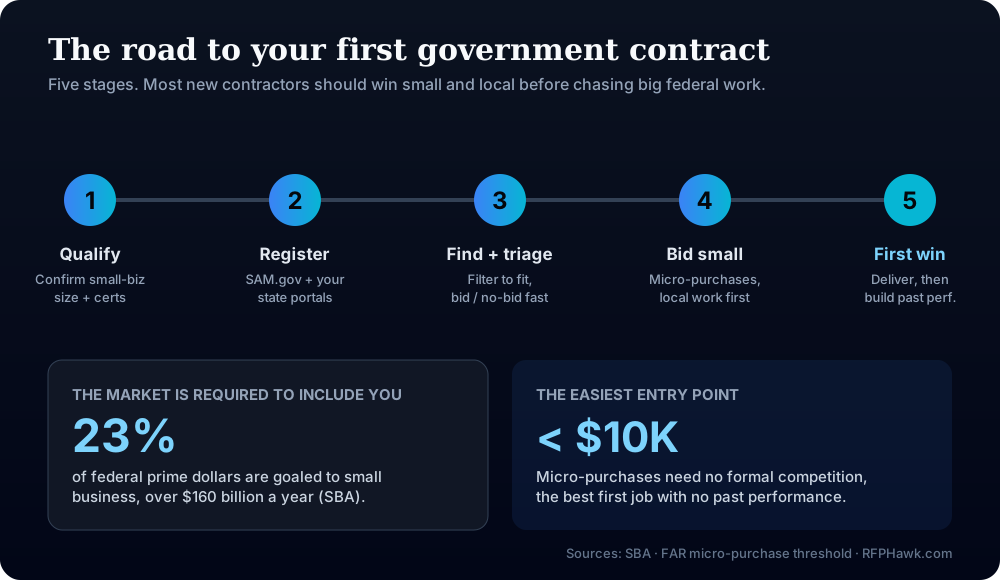
The rest of this guide walks each stage, and links to the detailed playbook for every one.
Stage 1: Qualify and get your house in order
Before you can win anything, confirm you count as a small business under the SBA size standards for your industry, which are based on either revenue or employee count depending on your NAICS code. This determines which set-asides you can compete for.
While you are here, look at whether you qualify for a socioeconomic certification. The 8(a), HUBZone, WOSB, and SDVOSB programs open contracts reserved for those categories, and some allow sole-source awards with no competition at all. You do not need a certification to start, but pursuing one you qualify for widens your path over time.
Pro Tip: Do not wait on certifications to begin. They can take months to secure. Register and start bidding now, and let the certification process run in parallel rather than as a prerequisite.
Stage 2: Register everywhere you will bid
Registration is the gate. For federal work, you must register on SAM.gov, which is free, mandatory, and takes two to four weeks to process, so start it early. Our SAM.gov registration guide walks through every field.
For state and local work, each state runs its own vendor portal, and you register separately in each one where you plan to bid. Our guide on registering across state procurement portals covers how to do it efficiently and which states to prioritize by opportunity volume.
Complete your profile in the SBA’s Dynamic Small Business Search too, so agency buyers and primes looking for partners can find you.
The registration checklist
| Registration | Cost | Time | Required for |
|---|---|---|---|
| SAM.gov | Free | 2 to 4 weeks | All federal contracts |
| State vendor portals | Free | ~20 min each | State and local work |
| SBA DSBS profile | Free | ~1 hour | Being found by buyers and primes |
| SBA certifications | Free | Weeks to months | Set-aside eligibility (optional) |
Stage 3: Find and triage the right opportunities
Now find work, and be selective. The most common first-timer mistake is reading every solicitation and chasing the exciting ones. Instead, filter to what fits your business, then triage fast.
Start by watching for sources sought notices, the pre-solicitation market research that lets you shape a requirement before it becomes an RFP. When a real solicitation appears, run it through a quick bid/no-bid triage so you invest days only in the ones you can win. And make sure opportunities actually reach you by setting up alerts instead of checking portals by hand.
Pro Tip: Your filter for a first contract is not “can we do this?” It is “can we win this, deliver it well, and use it as past performance?” Pick targets that make your second contract easier.
Stage 4: Start small, and win small
Here is the counterintuitive heart of the whole roadmap: your first government contract should be small on purpose.
Micro-purchases are federal buys under $15,000. They require no formal competitive process and can be awarded quickly, which makes them the single best entry point for a business with no federal past performance. A handful of these builds the track record that larger contracts demand.
Local and state work is similarly winnable. A county facilities contract or a school district service agreement has a fraction of the competition of a national federal solicitation, and the rule of two and set-asides tilt many of them toward small business.
Subcontracting is the third on-ramp. Delivering as a subcontractor to an established prime earns you federal experience and past performance without carrying the full risk. The SBA’s SubNet lists these opportunities.
The pattern across all three: win something small and deliverable, execute it flawlessly, and convert it into the past performance that unlocks the next tier. Firms that chase a big award first, with nothing behind them, almost always lose to a competitor who has three small wins on their record.
“Past performance is the currency of government contracting, and you can only earn it by performing. The first small contract is not the prize. It is the ticket to compete for the real ones.” — a principle echoed throughout the SBA’s contracting guidance
Stage 5: Deliver, then compound
Winning is the start, not the finish. Deliver the first contract on time and on scope, because in government work your performance is documented and follows you. A strong past-performance record is what turns one win into a pipeline.
Then compound: reuse your capability statement and proposal content, bid the next slightly larger target, and keep your registrations and codes tuned. Momentum in government contracting is real, and it starts the day you deliver your first job well.
What goes wrong for first-time contractors?
Four mistakes account for most early failures. Each is avoidable.
- Aiming too big, too soon. Chasing a major federal award with no past performance. Fix: start small and local.
- Registering wrong or incompletely. Bad NAICS or commodity codes mean the right opportunities never reach you. Fix: register precisely and tune your codes.
- Bidding everything. Spreading thin across unwinnable solicitations. Fix: triage ruthlessly.
- Quitting after a few losses. Concluding “there is no work” after a slow start. Fix: expect a ramp; the first win takes patience, the second comes faster.
Key takeaways
| Point | Details |
|---|---|
| The market is required to include you | 23% of federal prime dollars, over $160B/yr, goaled to small business |
| Start small on purpose | Micro-purchases under $15K and local work are the winnable first targets |
| Register before you bid | SAM.gov (2 to 4 weeks) plus state portals; free but not instant |
| Past performance compounds | One well-delivered small contract unlocks the next tier |
| Patience beats ambition early | Most quit before the first win; the second comes much faster |
Why we built RFPHawk for first-time contractors
We built RFPHawk because the hardest part of a first contract is not the paperwork, it is seeing the small, winnable opportunities in the noise. Our feed pulls federal and state solicitations into one place, filtered to your industry and location, so the local job you can actually win does not stay buried under national awards you cannot. You can browse the live feed without an account, and a free account lets you filter to exactly your NAICS codes and region, no credit card, so your very first bid target is one you can see clearly and win.
— The RFPHawk Team
Frequently asked questions
How do I win my first government contract?
Qualify as a small business, register on SAM.gov and your state portals, find opportunities that fit your business, and start with small local work or micro-purchases rather than large federal awards. Winning your first contract is about picking a winnable target, not the biggest one.
What is the easiest government contract to win first?
Micro-purchases, federal buys under $15,000, are the easiest entry point because they require no formal competition and can be awarded quickly. Small local and state contracts are also far more winnable for a first-time bidder than large national solicitations.
How long does it take to win a first government contract?
It varies widely. SAM.gov registration alone can take two to four weeks, and building enough visibility and past performance to win often takes several months of consistent bidding. Starting small shortens the path because those awards move faster.
Do I need certifications to win a government contract?
No. Certifications like 8(a), HUBZone, WOSB, and SDVOSB help by opening set-aside contracts, but you can win contracts without them. Register first and pursue certifications you qualify for in parallel, since they widen your opportunities over time.
Should I subcontract before bidding as a prime?
Often yes. Subcontracting to an established prime is a proven way to earn first federal experience and past performance without carrying the full risk. The SBA’s SubNet and prime contractor directories list subcontracting opportunities for small businesses.
Recommended
- How to Find Government RFPs — the discovery foundation for stage 3
- How to Write a Winning Government Proposal — turn a good target into a win
- Small Business Certifications Guide — widen your path with set-asides
Put RFPHawk to work on your pipeline.
Federal SAM.gov plus a growing list of state portals, refreshed daily and scored against your profile so you see the bids worth pursuing first.
Start free — no credit card