
Learning how to read an RFP fast is the difference between bidding more work and drowning in it. A government request for proposal can run 50 to 250 pages, and reading each one cover to cover is how small teams burn a week and still bid the wrong jobs. The fix is triage: a repeatable order for reading the five things that decide whether an opportunity is worth your time, so you reach a confident bid or no-bid call in about 20 minutes. This guide gives you that system, the section structure that makes it possible, and the red flags that turn a maybe into an instant no. Do it right and you protect your most limited resource, which is not money, it is the hours you would otherwise pour into proposals you were never going to win.
Why speed reading an RFP matters: the cost of a late no-bid
The most expensive mistake in government contracting is not losing a bid. It is deciding not to bid on page 180, after your team already spent three days building a proposal. A late no-bid burns real money, and it is entirely avoidable with a reading order that surfaces show-stoppers first.
The goal of a first read is not to understand everything. It is to answer one question: should we invest the days a real proposal takes? Everything below serves that single decision.

Cover-to-cover vs. triage reading
| Approach | Time to a decision | Risk |
|---|---|---|
| Read every page in order | Hours to days | Discover a blocker late, after sunk effort |
| Triage the five key areas first | 15 to 30 minutes | Almost none; blockers surface immediately |
What is the Uniform Contract Format (and why it makes triage possible)?
Most federal solicitations follow the Uniform Contract Format, a standard structure that labels sections A through M. Because the layout is consistent across agencies, you can jump straight to the parts that decide your bid instead of hunting through a wall of text. The FAR describes this format in Subpart 15.204, and once you know it, every RFP starts to look the same.
The sections that matter most for a fast read:
- Section A — the cover page: title, solicitation number, key dates at a glance.
- Section C — the statement of work: what the government is actually buying (sometimes moved to Section J as an attachment).
- Section L — instructions for how to prepare and submit your proposal.
- Section M — the evaluation factors: exactly how they will pick the winner.
State and local RFPs do not always use the A-to-M labels, but they contain the same ingredients under different headings. The skill transfers: you are always hunting for deadline, eligibility, scope, evaluation, and mandatory requirements.
Pro Tip: When you open any RFP, immediately find Section M (or its equivalent). Knowing how you will be scored before you read the scope changes how you read everything else.
How do you triage an RFP in five steps?
Here is the reading order. Follow it top to bottom and stop the moment you hit a hard blocker.
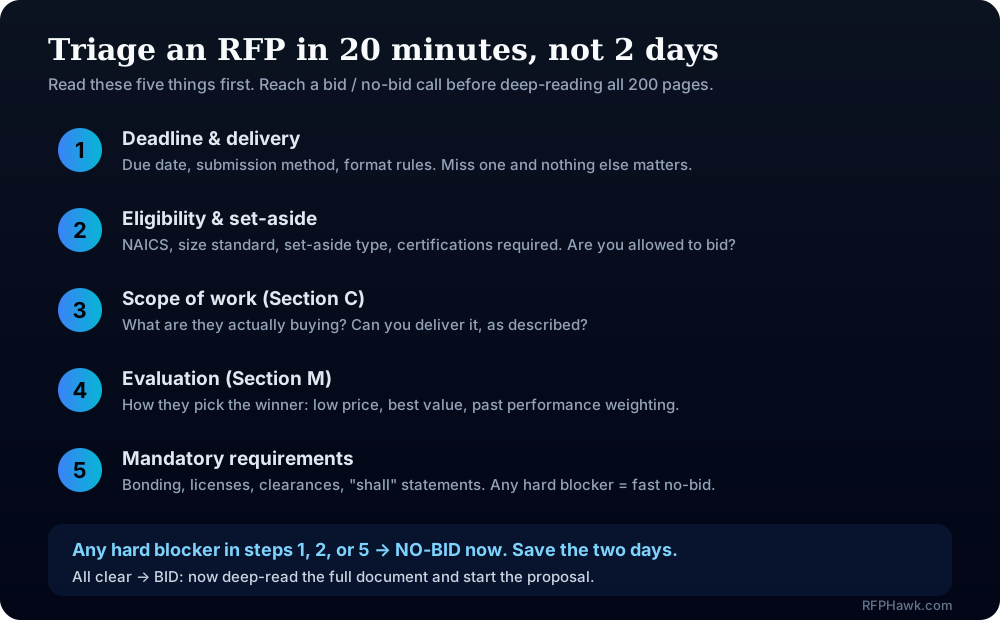
- Deadline and delivery method. Find the due date, the submission method, and the format rules first. A brilliant proposal submitted to the wrong portal, or one minute late, scores zero. If the timeline is impossible for your team, you are done: no-bid in two minutes.
- Eligibility and set-aside. Check the NAICS code, the size standard, the set-aside type, and any required certifications. If it is a set-aside you do not qualify for, or demands a certification you do not hold, stop here.
- Scope of work (Section C). Now read what they are buying. Can you deliver this, as described, with your current team and past performance? Not “could you learn to,” but “can you, now.”
- Evaluation criteria (Section M). Learn how they pick the winner: lowest price, best value, technical weighting, past-performance emphasis. This tells you whether your strengths even match what they reward.
- Mandatory requirements. Scan for hard blockers: bonding capacity, specific licenses, security clearances, and every “shall” statement. One requirement you cannot meet is a clean no-bid, no matter how much you like the work.
If steps 1, 2, or 5 surface a blocker, you have your answer and you have spent 20 minutes instead of three days. If everything clears, you commit to the full read and the proposal with real confidence. (Our guide on how to write a winning proposal picks up exactly where this triage ends.)
Pro Tip: Build the five steps into a one-page checklist and run every RFP through it before anyone writes a word. A consistent triage gate is what separates shops that bid deliberately from shops that bid on adrenaline.
What are the red flags for a fast no-bid?
Some signals should stop you early even when you technically qualify. Treat these as heavy thumbs on the no-bid side of the scale.
Wired requirements. When the scope reads like a specific incumbent’s résumé, unusual certifications, oddly exact experience, a niche product by name, the competition may already be decided. Not always, but weigh it.
Unrealistic budget. If the stated or implied budget sits far below market rate for the work, either the agency has the wrong expectation or you will win by underpricing yourself into a loss.
No-contact and re-bid history. A refusal to answer questions, or a solicitation that has gone to RFP repeatedly without an award, both signal trouble worth respecting.
Not every red flag is fatal, but two or three together usually mean your hours are better spent on the next opportunity. Discipline about walking away is a competitive advantage, because the time you save goes into bids you can actually win.
“The proposals you decline to write are as important as the ones you win. Capacity spent on a doomed bid is capacity stolen from a winnable one.” — a principle every experienced capture manager learns the hard way
How do you make triage a repeatable habit?
A triage system only works if it runs every time, not just when you remember. Build it into your pipeline.
- Standardize the checklist. Five steps, one page, same order every time. Anyone on the team can run it.
- Log the decision. Record every bid/no-bid call and why. Over months, the pattern of what you win teaches you what to triage toward.
- Triage at intake, not at deadline. The whole value is deciding early. Run the gate the day an opportunity lands, while there is still time to pursue the good ones properly.
Triage vs. full proposal effort, at a glance
| Stage | Time | Purpose |
|---|---|---|
| Triage gate | 15 to 30 min | Decide bid or no-bid |
| Full read | 1 to 3 hours | Understand every requirement |
| Proposal build | Days | Win the award |
The earlier the gate, the more of your calendar goes to winnable work. And the earlier you see opportunities in the first place, the more time you have to triage them well, which is where a filtered feed earns its keep.
Key takeaways
| Point | Details |
|---|---|
| Do not read cover to cover | Triage five areas first; decide in about 20 minutes |
| Deadline and eligibility come first | A missed deadline or a disqualifying set-aside makes the rest moot |
| Learn the Uniform Contract Format | Sections C, L, and M are where the decisive information lives |
| Respect the red flags | Wired scope, low budget, and re-bid history justify walking away |
| Make it a repeatable gate | Same checklist, run at intake, decision logged every time |
Why fast triage needs early visibility
We built RFPHawk around a simple truth: you can only triage the opportunities you actually see, and you triage them best with time to spare. Our feed pulls federal and state solicitations into one place, filtered to your industry and location, so the relevant RFPs reach you early instead of the afternoon before they close. You can browse the live feed without an account, and a free account lets you filter to exactly your NAICS codes and region so the triage list is short and relevant before you read a single page. The faster the right RFPs find you, the more of them you can put through a proper bid/no-bid gate, and the fewer good ones slip past while you were buried in a bad one.
— The RFPHawk Team
Frequently asked questions
How do you read a government RFP quickly?
Do not read cover to cover. Triage five things first: the deadline and submission rules, your eligibility and any set-aside, the scope of work, the evaluation criteria, and the mandatory requirements. That is enough to reach a bid or no-bid decision in about 20 minutes.
What is the Uniform Contract Format?
The Uniform Contract Format is the standard A-through-M section structure most federal solicitations follow. Section C holds the statement of work, Section L holds proposal instructions, and Section M holds the evaluation criteria. Knowing it lets you jump straight to what matters.
What should you look at first in an RFP?
The submission deadline and method first, because missing it disqualifies you no matter how good your bid is. Then your eligibility and any set-aside, so you confirm you are even allowed to bid before investing time in the rest.
What is a bid/no-bid decision?
A bid/no-bid decision is the deliberate choice of whether to pursue an opportunity. Reaching it early, before writing a full proposal, saves the days of work a late no-bid wastes. A quick triage of five key areas is enough to decide.
How long should it take to decide whether to bid?
For most small businesses, an initial bid/no-bid triage should take 15 to 30 minutes, not days. If nothing in the five key areas is a hard blocker, you commit to a full read and proposal; if a show-stopper appears, you stop immediately.
Recommended
- What Is a Sources Sought Notice — triage the opportunity before the RFP even exists
- How to Write a Winning Government Proposal — what to do once you decide to bid
- How to Set Up Government RFP Alerts — see the right RFPs early enough to triage them well
Put RFPHawk to work on your pipeline.
Federal SAM.gov plus a growing list of state portals, refreshed daily and scored against your profile so you see the bids worth pursuing first.
Start free — no credit card