
The most winnable government contracts for a small business usually aren’t federal — they’re local government RFPs from the city, county, and school district down the road. Local agencies buy everything from landscaping and IT support to construction and consulting, with shorter cycles and far less competition than the federal market. The catch is that “local government” isn’t one buyer or one website; it’s thousands of separate jurisdictions, each posting opportunities in its own place. This guide shows where local RFPs actually live, how to find the ones near you, and how to stop checking a dozen portals by hand.
Where local government RFPs are actually posted
There is no SAM.gov for local government. Instead, opportunities are scattered across two kinds of places: each agency’s own purchasing page, and the procurement platforms that agencies pay to host their bids.
And “local government” is a much bigger universe than most people picture. All of these issue competitive RFPs and bids:
- Cities and towns — the obvious one, but the smallest slice.
- Counties — often the biggest local spenders in a region.
- School districts and community colleges — huge, steady buyers.
- Special districts — water, fire, parks, transit, ports, housing authorities.
- Municipal utilities — power, water, and waste, frequently with large contracts.

Because there’s no single portal, most contractors work a mix of channels. Here’s how they compare.
| Channel | Coverage | Cost | Best for |
|---|---|---|---|
| Individual agency sites | One jurisdiction each | Free | Targeting a few specific places |
| BidNet Direct | Many municipalities, multi-state groups | Free to register, paid alerts | Multi-jurisdiction coverage |
| DemandStar | Thousands of local agencies | Free tier + paid | Broad local reach |
| Bonfire / Public Purchase / OpenGov | Agencies on that platform | Free registration | Wherever your targets are |
| RFPHawk | Federal + state + local aggregators, one feed | Free browse, Pro alerts | One place instead of many |
The map of who buys and where they post looks like this — one reason local discovery feels harder than it should.
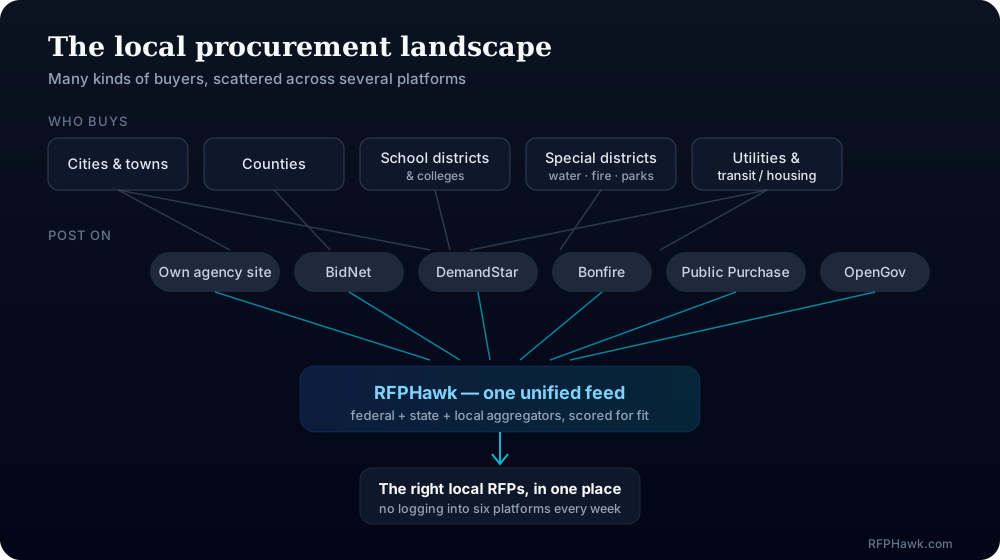
If you’re only working your home state’s portal, you’re likely missing most of this. Our guide to bidding on state government contracts covers the state layer; this is the layer beneath it, and it’s where a lot of the winnable work hides. The SBA’s local assistance network — including APEX Accelerators (formerly PTACs) — can help you map the agencies in your region for free.
Pro Tip: Start with your county, not your city. County governments usually spend more than the cities inside them and field fewer bids per opportunity, so your odds per pursuit are often better.
How do you find local government RFPs in your area?
A repeatable local-discovery routine looks like this.
- List the jurisdictions near you. Your city, county, school district, community college, and any special districts or utilities. This is your target list — most contractors are surprised how many buyers are within 30 miles.
- Register on the big aggregators. BidNet Direct, DemandStar, and whichever of Bonfire, Public Purchase, or OpenGov your targets use. Registration is usually free; this alone covers a lot of ground.
- Check the holdouts directly. Some agencies post only on their own purchasing page. Bookmark those and check weekly.
- Match your NAICS and commodity codes. Local platforms notify by commodity code, so pick them carefully — see our guide to choosing NAICS codes, which map closely to the commodity codes local systems use.
- Set alerts and a review cadence. Weekly is usually enough for local work, which moves slower than federal.
Pro Tip: School districts and special districts are the most overlooked local buyers because they don’t show up where people expect. Add them to your target list explicitly — they’re often the least-crowded bids in your area.
Why is local government work good for small businesses?
Local contracts don’t get the attention federal ones do, which is exactly why they’re winnable. The advantages stack up.
Less competition. A county landscaping bid might draw three responses; a federal one draws thirty. Fewer, more local competitors means better odds per pursuit.
Shorter cycles. Local procurements often move from posting to award in weeks, not the many months a federal award can take. You get paid sooner and learn faster.
No federal red tape. Purely local contracts usually don’t require SAM.gov registration or federal certifications — just the jurisdiction’s own vendor registration.
Local preference. Many cities and counties give a scoring or price preference to local businesses, and some run their own small, minority, and women-owned business programs.
Relationships compound. The same handful of buyers issue repeat work. Deliver well on one contract and you’re a known quantity for the next.
“Small businesses chase federal contracts because they’re glamorous, and ignore the county across the street that would actually hire them. The nearest government is usually the easiest first customer.” — a common refrain among procurement technical-assistance advisors
How do you register as a vendor with local governments?
Registration is the price of admission, and it’s mostly free — the work is doing it in the right places. Register directly with your priority jurisdictions, and on the platform each one uses.
| Platform | Who uses it | Vendor registration | Alerts |
|---|---|---|---|
| BidNet Direct | Municipal groups, multi-state | Free | Paid for full alerts |
| DemandStar | Thousands of local agencies | Free (limited) | Paid tiers |
| Bonfire | Cities, counties, universities | Free | Included per agency |
| Public Purchase | Smaller municipalities | Free | Included |
| OpenGov Procurement | Modern city/county systems | Free | Included |
Keep a reusable registration kit on hand: your legal entity details, W-9, NAICS and commodity codes, certifications, insurance and bonding info, and a short capability blurb. You’ll paste the same information into a dozen forms, so having it ready turns an afternoon of registrations into an hour. Then let a unified feed do the monitoring — browse what’s open now to see the range before you commit to registering everywhere.
Key Takeaways
Local government RFPs are the most winnable government work for small businesses; the hard part is that they’re scattered across thousands of jurisdictions and several platforms.
| Point | Details |
|---|---|
| Local is winnable | Less competition, shorter cycles, and frequent local-vendor preference. |
| It’s more than cities | Counties, school districts, special districts, and utilities all issue RFPs. |
| There’s no single portal | Opportunities live on agency sites plus BidNet, DemandStar, Bonfire, Public Purchase, and OpenGov. |
| Usually no SAM.gov needed | Purely local contracts require only that jurisdiction’s vendor registration. |
| Register once, reuse everywhere | Keep a registration kit ready; the same details fill every platform’s forms. |
Why small businesses overlook the easiest contracts they could win
We’ve watched a lot of small businesses spend months trying to break into federal contracting while ignoring the county government five minutes away that would happily hire them. The federal market is huge, but it’s also crowded, slow, and paperwork-heavy. Meanwhile the local school district needs an IT vendor, the county needs its grounds maintained, and the municipal utility needs a contractor — and only a handful of local firms are bothering to bid.
The reason local work gets overlooked is precisely the reason it’s winnable: it’s fragmented and unglamorous. There’s no single famous portal, no press releases, just thousands of ordinary agencies quietly posting ordinary work. That fragmentation scares off the businesses chasing the “big” opportunities, which leaves the field open for the ones willing to do the unglamorous thing — map the buyers in their backyard and show up consistently. The nearest government is almost always the easiest first customer. Win a few local contracts, build past performance and relationships, and the bigger opportunities get easier from there.
— The RFPHawk Team
RFPHawk: local, state, and federal in one feed
The reason local discovery is painful is the fragmentation — and that’s exactly what RFPHawk is built to fix. We pull opportunities from federal sources (SAM.gov, Grants.gov), state portals, and the local and regional aggregators many cities and counties use — BidNet, Bonfire, Public Purchase, OpenGov, and Periscope — into a single feed, so you’re not logging into six platforms every week.
You can browse live opportunities free to see what’s open near you right now. Match scoring, saved searches, and daily or weekly alerts — so new local RFPs in your niche come to you — are part of RFPHawk Pro, which you can try free for 14 days (cancel anytime before it bills). Map your local buyers once, then let the right opportunities find you.
FAQ
Where are local government RFPs posted?
On each government’s own purchasing page and on procurement platforms they use — BidNet Direct, DemandStar, Bonfire, Public Purchase, and OpenGov. Because there’s no single portal, most contractors register on the big aggregators and monitor a few local sites directly.
Do I need SAM.gov registration for local government contracts?
Usually not. SAM.gov registration is a federal requirement. Purely local city, county, and school-district contracts generally require only that jurisdiction’s own vendor registration. If a local project uses federal funding, though, you may still need an active SAM.gov UEI.
Are local government contracts easier to win than federal ones?
Often yes for a small business. Local contracts have shorter cycles, less competition, smaller dollar values, and frequently a local-vendor preference. The trade-off is fragmentation — thousands of separate jurisdictions, each posting in its own place.
How do I register as a vendor with a city or county?
Register directly on the jurisdiction’s purchasing site, and on the aggregator platform it uses (BidNet, DemandStar, Bonfire, Public Purchase, or OpenGov). Registration is typically free; some aggregators charge for full email alerts. Keep your NAICS codes and W-9 handy.
What kinds of local governments issue RFPs?
Far more than just cities. Counties, school districts, community colleges, special districts (water, fire, parks), municipal utilities, transit authorities, and housing authorities all buy goods and services through competitive RFPs and bids.
Put RFPHawk to work on your pipeline.
Federal SAM.gov plus a growing list of state portals, refreshed daily and scored against your profile so you see the bids worth pursuing first.
Start free — no credit card